
INTRODUCTION

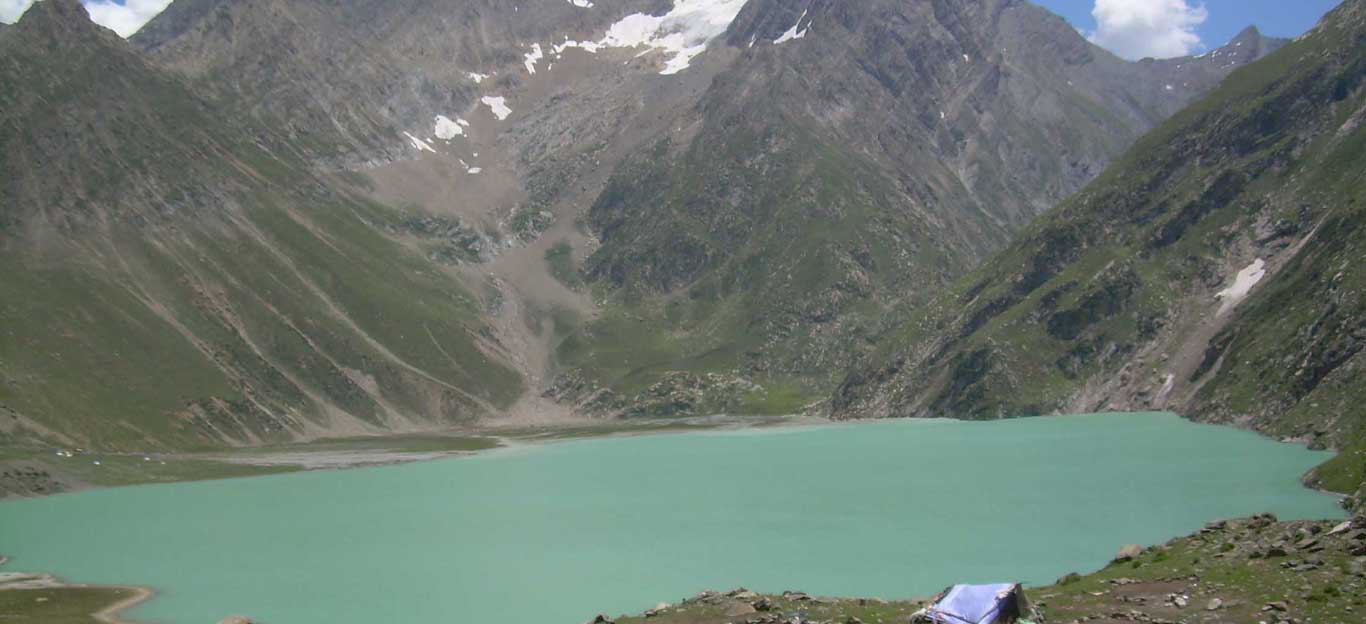
The Vale of Kashmir forms an ellipse within the inner mountains of the Himgayan Range, a jewel set in the heart of a rock. These mountains with snow-capped summits and pine-mantled slopes embosom glades and meadows-ideal sites for camping. The high mountain lakes, with turquoise blue waters fed by shimmering glaciers, hold up their mirrors to the azure sky within retreats of reposeful tranquillity, soothing to the fatigued body and mind, and elevating to the soul. The twitter of birds in a region where the deciduous belt meets the coniferous or round the glade is a rare delight. The fragrance from the opal-tinted flora on the torrent banks, or from the flowers peeping through the forest undergrowth, or be-gemming the meadows, is most exhilarating.

The valley runs from north-west to south-east and is about 84 miles long by 25 miles broad. On the east the mountain ranges rear their heads in Gwashibrari (17,779 ft.) and Nun Khun (24,400 ft). On the north behind the ninth mountain range stands the colossal peak of Nanga Parbat (26,643 ft.) like a crystal cone against the azure-blue sky. On the west and south the Pantsal Range, with peaks rising to over 15,000 ft., separates the valleys from the Panjab. A large number of passes-gateways in the mountain wars-lie in these ranges. Of all the passes the Zoji La, though comparatively low, is extremely dangerous during winter months, when it is a mass of impregnable battlements of snow, an in March when it is the playground of avalanches.

The valley was once the bed of a lake called Sati Sar. The alluvial Plateaus (udars) are the accumulations of sediment in the lake. It was drained, so goes the mythological account, by Kashyap Reshi whom the gods assisted in killing the demon who haunted it. Only the lower mountain slopes were inhabited then. This alluvial plain is traversed by the Vetasta (Jhelum) which receives effluents right and left, issuing from the high lakes and glaciers.

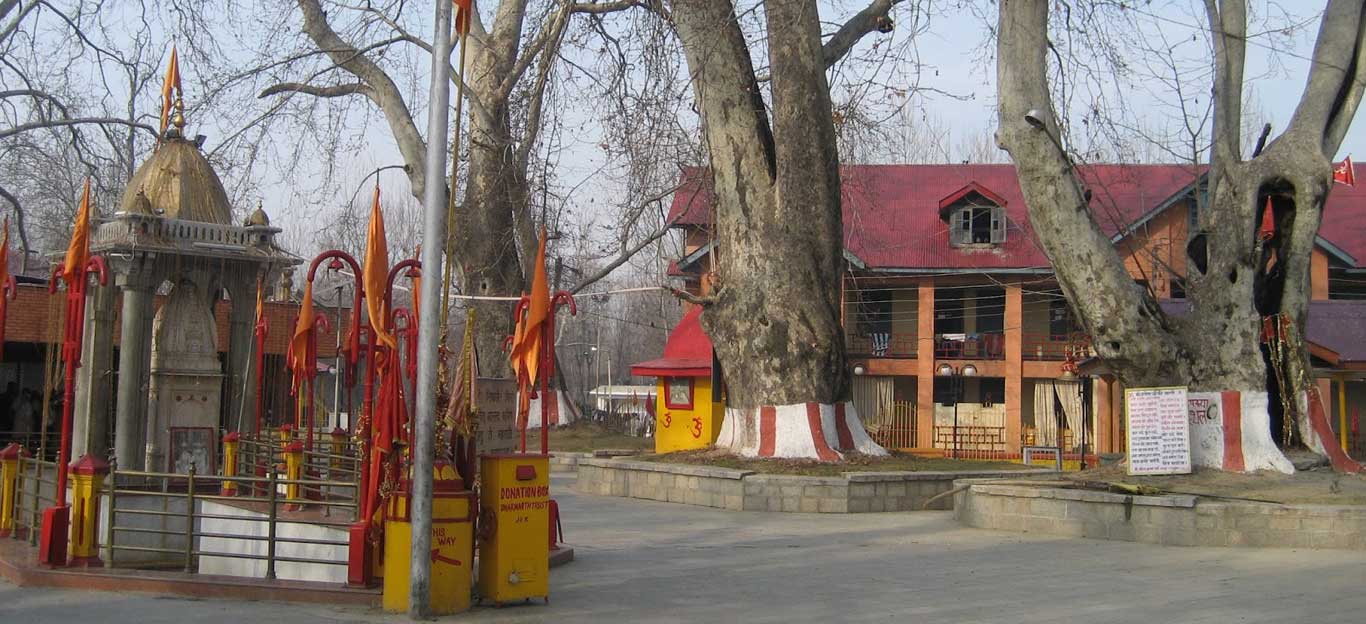
Shri Nagar or, as it is commonly called, Srinagar, is the chief town of the country. 'Shri' means beauty or wealth of knowledge and 'nagar' a city. In ancient times this city was one of the chief seats of learning in Asia. There the students from other countries came to study Sanskrit. There is still a custom in vogue in the plains of Hindustan which requires a boy who is to be invested with the sacred thread, to walk seven steps towards Kashmir. The underlying idea is that the boy is sent to Kashmir to receive his education and returns after completing it. No person in India was in those days recognised as a scholar unless he had a certificate to that effect from the Kashmir University. Kashmir is still called Sharda Pit-the seat of learning.

The present site of the town was selected by the pious King Pravarasen II (A.D. 112-172). The old town, existed where the present Badami Bagh cantonment stands. The busiest part of the town was the right bank which was also the market place. A bridge of boats connected it with the left bank. The good king is reputed to have flown away to Kailas (in Tibet) through a crack in the ceiling of a temple which had been located near the south-western corner of Hari Parbat where a Mohammedan ziarat stands now. He worshipped in the temple and his subjects saw the heavens shining like a star and vanishing like a meteor.

It is said that king Pravarasen the founder of the city of Srinagar has divided the city into eight wards, each ward having its own guardian deity, just as the Municipality has divided the city into wards each under a ward officer.

The wards roughly are:

 1. Rainawari and Dal Lake. The guardian deity is Vitalraja Bhairau. Fairs in honour of the deity are held twice a year. In Poh 6th day of dark fortnight and in Baisakh on the 6th day of dark fortnight.
2. Sathu, Amira Kadal, and Ganpatyar. The guardian deity is Anandishwar Bhairau. Situated in Maisum near Dashinami Akohada. Inside the temple is a well where worship takes place. The annual fair is held on the 10th day of the dark fortnight in the month of Poh.
3. Haba Kadal, left bank of the Vetasta, and Dood Ganga. The guardian deity is Tushkaraja Bhairau near the cremation ground on the right bank of the Dood Ganga. A temple with a mulberry tree just outside it is the sanctum. The annual fair is held on the 6th day of dark fortnight in the month of Baisakh.
4. Zaina Kadal left bank of the Vetasta. The guardian deity is Jayeksen Bhairau.
5. Beyond Zaina Kadal. The guardian deity is Wishaksen Bhairau. The spots sacred to these Bhairaus are supposed to be just outside the Pather Masjid opposite to Maha Kali. The ruins of old temples on these spots survive to this day. Nothing is known about their annual fairs.
6. Safa Kadal, Chetsabal. The guardian deity is Bhkhatkishwar Bhairau. At the confluence of the Vetasta and the Dood Ganga there is a temple to mark the sacred spot. The annual fair is held on Chet Purnamasi.
7. Hari Parbat, Ali Kadal (right bank), Safa Kadal (right bank). The guardian deity is Purnaraja Bhairau. The shrine lies near Vantapora in a vegetable garden where there is a spring and a mulberry tree. The annual fair is held on the 5th day dark fortnight of Baisakh.
8. Bhori Kadal, Fateh Kadal (right bank), Zaina Kadal (right bank). The guardian deity is Mangalraja Bhairau. The shrine lies on an island opposite to Dilawar Khan Bagh and is marked by a mulberry tree and some sheds. The annual fair is held in Baisakh on the 6th day of dark fortnight.

In making offerings to any deity mention is made of the guardian deity known as Yeharashtadipati.

To all these deities offerings are made in the form of cooked rice coloured yellow with termeric, cooked liver and raw lungs with heart of mutton. The raw meat is thrown to kites. 'Raw lungs with heart' is the symbol of self-surrender or complete resignation to the Supreme Soul one of whose aspects may be represented by a particular deity.

Srinagar is gracefully situated on both the banks of the Vetasta which is spanned here by nine bridges. The city is equidistant from Baramulla and Anant Nag about 34 nules from each. It is more or less in the Centre of the valley. Its eastern suburbs extend to the shore of the Dal Lake. It is expanding rapidly in all directions. It is almost equidistant from Jammu, Rawalpindi, Leh and Gilgit, and is situated at the head of the passes leading into the Indian plains and Central Asia. Hence commercially and strategically it is very important.

Srinagar is encompassed with a large number of gardens which yield various kinds of fruit-almonds, cherries, apricots, plums, pears, apples and strawberries. They also produce vegetables like peas and beans. Cucumbers, melons and musk-melons are the produce of floating gardens. The Lar area, even now of repute for its grapes, could be turned into the Grape Garden of Kashmir and thus bring considerable wealth to the country. The number of vegetable gardens, too, is considerable, the chief vegetable being knoll kholl (hak).

Spring in Srinagar

About the time when the earth tilts to her position of vernal equinox, vernal breezes begin to vibrate and these are first felt by the kite and the sparrow. We hear mating screams of the former and observe the nuptial dance of the latter. The same vibration, I suppose, rouses an impulse in birds living in other climes which urges them to migrate to rear their young. The first to arrive about the last week of February is the starling, followed by the swallow and the hoopoe.

The oblique rays of the sun begin to assume the vertical position, the earth slowly absorbing the sun's heat gives birth to the pussy-willow, Gagea Kashmiriana, Sternbergia, daffodil and hyacinth, while mountain slopes are graced by the Viburnum, Colchicum luteum and Crown imperialis.

On the morning of their New Year's Day, which falls on the first day of the new moon when she and the sun arc both in the Pisces (min), the first thing which the Kashmiri pandit must see is a dish full of unhusked rice covered with new Viburnum flowers, new orris roots, curds, a bun, an ink-pot and a pen, the new calendar, cooked rice, walnuts and a silver coin. Every member of the family takes a walnut and after bathing offers it to the river.

Late in March the almond gardens round the city are in full bloom. An ascent to the Hari Parbat Hill reveals an enchanting panorama to the spectator. The mountain ring round the valley, crested with silvery snow, gleams in the solar rays under the azure-blue sky. The light and deep pink almond flowers stretch for miles, interspersed with golden rape-seed fields. The placidness of the Dal Lake with turfed beach fringed with willow, bearing lemon-yellow catkin redolent with fragrance, presents an entrancing sight. The gardens round the fort are thronged with merry holiday-makers released from the grip of winter-musical parties swaying in ecstasy to the tune of the guitar, picnic groups with their steaming samavars, philosophical gatherings discussing the subtleties of the Supreme Soul, all squatting or lounging on velvety turf sprinkled over with white petals. The poor with affected contentment satisfy themselves by eating roasted water- chestnuts (Trapa bispinosa) mixed with pounded chillis, ginger and salt. The vernal breeze is believed to be at its best when a chinar leaf is of the size of a duck's foot. This is called Yusuf Shahi Hawa (probably after Yusuf Shah Tsak the epicurean king of Kashmir).

Summer

As the earth moves on to the position of summer solstice the vertical rays of the sun diffuse heat over the plain and we have sultry days. The heat occasionally becomes almost intolerable, but it is generally followed by showers of rain. Probably the reason is that the heat creates convectional currents in the valley, which rise high and create a vacuum. The winds from the surrounding mountains, saturated with moisture, descend into the valleys and when they rise again they expand their temperature decreases and they fall as rain.

The trees are clothed with dense foliage, especially the chinar (boin) which gives a cool, refreshing and animating shade. People hire doongis, especially on Sundays, and spend the day going round the willow-fringed banks of Telbal, turfed islets or roaming about the Moghul Gardens where the fountains play and form hundreds of rainbows; where flower beds of diverse colours meet the eye amidst the well-trimmed turf. Scenes like these cannot but enrapture the onlooker who probably leaning against the shady chinar feels transported to an ethereal world. The cooing of doves, warbling of thrushes, chirping of tits and carolling of orioles heard from numerous trees must aid the overpowering effect of what the wondering eyes behold.

On a festival day or during a fair, hundreds of boats are seen plying on the lake. Some of the passengers give vent to their feelings of joy through song, others play on musical instruments, while others again beat time with rhythmical gesticulations. Early in June the strawberry, cherry, apricot, and the cucumber appear temptingly in fruit shops; while melons, musk-melons, pears, plums and grapes do likewise in July and August. The main valley becomes considerably hot in summer months and visitors find shade and shelter in the side valleys and health resorts situated therein. A drive of a couple of hours would take one to a cool and refreshing atmosphere. Around willow groves and paddy fields the mosquitoes are a pest from late June to mid-August. They are bigger and their sting is more painful round the Wular Lake; but fortunately they are not of a malarial nature. The pomegranate is the last tree to bloom. The ruby-red flowers in their setting of emerald-green leaves are a charming sight. The fruit when ripe has a cooling effect on the heart and liver. Some of the wild plants which clothe the waste spots round grave-yards and the fort are: Pegasus harmala (isband), iris (white and mauve).

On a summer afternoon the view from some vantage point in the Chashmai Shahi area is wondrously refreshing to the eye. The poplars, chinars and groves of trees in their darkgreen liveries, the face of the lake with two islets like glittering eyes smiling in calm repose, fill the heart with a delight too deep for words, while the distant mountains often wearing crowns of silvery clouds, the tin roofs scintillating amidst the green foliage of surrounding trees like constellations, and flowers growing on buildings having birch-bark roofs, present an unforgettable scene. The three hills, Aha Teng on the north, Shankarachar on the south, and Hari Parbat like a crouched lion in the middle, appear three distinct landmarks of the valley. The mountains round the valley become wrapped in haze and the snow begins to thaw leaving a snow-line at Harmoukh and two miniature glaciers round Romesh Thong (Sunset Peak) and Tatakoti which can be discerned from Srinagar.

It is believed that the rainfall of the thirteen days of the summer solstice is not beneficial to vegetables. This time is called ador. According to Kashmiris the rainy season begins when the sun enters Cancer. In the past, immemorial custom required every young child to bathe in the river, put on a woollen garment on the naked body and eat cakes prepared from rice-flour and shaped like a coconut cut in half, with Amaranthus (lisa) and plum cooked together. This custom probably owed its origin to hygienic considerations.

Autumn

After the autumnal equinox the leaves of the trees begin to assume various shades of gay colours. Poplars change their leaves to saffron and those of the honeysuckle and peach are a mixture of red, yellow and brown. Willows get greenish-yellow and mulberry takes after his tall brother the poplar. The chinar the celestial tree, appears in heavenly robes of red emitting as it were flames of fire. The near mountains look brown, but ravines which are filled with witch-hazel are a mine of gold. The Chinar Bagh and Nasim Bigh turn into colonies of white giants with myriads of flaming hands. The reflection of the mountain in the lake in front of the Nasim Bagh turns the water into wine which one drinks avidly through the eyes. The Shalamar and the Nishat flaunt their seasonal flower beds of zinnias and if the footpath along these beds be sprinkled over with red lime under the autumnal tints of chinars the resulting scene is unique.

Every kind of fruit and vegetable is fully ripe for the table. The delicious sappy Kashmir pears, pomegranates and apples are abundant. Swallows, young and old, assemble on electric wires in preparation for migration to warmer latitudes. The adult birds guide their young across the mountain chains, river valleys and seas to their haunts. The river becomes lovely to look at and pond weeds disappear. It is said that the rays from Canopus which appear about the last week of September at 6 a.m. on the southern horizon turn all vegetation yellow. It is never seen higher than Orion's belt from the horizon.

THE STARS OF AN OCTOBER DAWN IN KASHMIR

One of the mottoes of the C.M.S. school is:

Two men looked out of prison bars,
One saw the mud, the other stars.
what a delight it is to cast a look at the firmament for a minute and transport our thoughts from the turmoil, strife and was of this planet to the calm immensity of the firmament.

I chose the dawn of October 20th because we can see at this time of the year a star named Canopus, brightest star in the Argo Navis constellation.

It is every year observed about the 29th September at 6 a.m., on the southern horizon. It never rises higher than the length of Orion's belt above the horizon, and after tracing a curve disappears and the mountain. It lies exactly south of Sirius. If a line be drawn joining Betelgeuse and Saiph in the Orion constellation and then produced it will pass not very far from Canopus which forms the south-western vertex of a rhomboid. It is known by the name of Aghasti Reshi and Suhul. It is said that Aghasti Reshi was the first Aryan migrant to the south (Deccan). There is a myth associated with this star. The Vindayas-the northern mountain range of the Deccan-were rising higher and higher. The gods became uneasy lest the mountain should cut across the sun's path in the sky. They held a meeting and decided to beseech Aghasti Reshi to go to the south. Vindhya was the disciple of Aghasti. If he would behave disrespectfully to his guru (teacher) he would be cursed. They went in a body to Aghasti and apprised him of their distress. Thereupon Aghasti consented and went to the south. When Vindhya Parbat saw his guru, he prostrated himself and fell at his feet. The guru put his right hand on his head and bade him stay in that posture till he returned. But he settled for ever in the south, and the gods rejoiced.

The peasants attribute the drooping of the yellow ears of the rice plant and the falling of the autumnal leaves to the rise of Canopus. In October in the eastern horizon rises Leo in the shape of a scythe and triangle. Near the handle of the scythe shines Regulus and at the apex of the triangle which points southward is Denebola.

At the north-eastern corner in the same month is the Great Bear with the tail touching the horizon. Tht trapezium of the Little Bear is behind the Lar mountain. On the western horizon Fomalhaut and Pegasus set. About the 15th of this month at 6 a.m. Fomalhaut is on the western horizon and Canopus on the southern.

Some of the constellation towards the interior of the sky are Orion whose belt points north towards Aldebemn and south towards Sirius, Canis major, Canis minor, Aries, Triangulum and Cassiopeia.

About the middle of October the plateaus of Pampor turn into wonderful garden by the purple bloom of saffron (Crocus sativus) called Kong in Kashmiri. The bulb of this plant is believed to be the gift of a serpent-god (Takshak) who was cured of his eye disease by a physician. The stigma of this flower is used in worship and as a spice. It is also used in medicinal preparations. The expanse of this blossom at sunrise and at sunset is most delicious to see.

Winter

The earth now rotating on its axis revolving round the sun on its orbit occupies the position of Winter Solstice when the Northern Hemisphere is turned away from the sun which brings in the cold weather in this region. Trees become devoid of leaves, mountains look brown, and the Pantsal Range receives the first instalment of snow. The winter migrants leave their summer haunts and appear here. The jungle crow, the Simla streaked laughing-thrush and the wall-creeper and many more of their kind are found around the valley. Almost all swamps and marshes round the valley are full of waterfowl which come down from northern regions where they have their breeding grounds. Some of these waterfowl are the black-winged stilt, the jack snipe the cormorant, the white-eyed pochard, the peewit, the wood sandpiper, the red shank, the grey lag-loose, the brahmany duck, the mallard, the gadwall, the widgeon, the garganey, the teal, the pintail, the shoveller, the gooseander and the grebe.

We hear the flutter of their wings and their cries at dusk and dawn as they return to their diurnal haunts. The Anchar, the Wular and the Pampor swamps are worth a visit by a sportsman, provided he has a licence, and the reserved areas like Hakor Sar or Hayigam can be visited with the permission of the Controller of the State Rakhs.

The winter conditions in Kashmir are subject to variation. I remember a year when there was no snowfall, and we had sunny days throughout.

Generally the first snow falls during Christmastide. The first fall is an occasion of great merriment. One who receives unawares a sample of the first snow, given or sent to him by a friend or relation, is bound by custom to give a sumptuous feast. Fathers send delicious dishes to their newly-married daughters. It is said that the winters are not so severe now as they used to be. Sometimes it snows off and on for short intervals and the snow which thus gathers on the ground takes no time to thaw. Sometimes it may snow to a depth of two feet and the frost-bound snow may stand for months. According to a local tradition people lived in Kashmir in summer only, but vacated the valley at the advent of winter. An old man unable to walk decided to stay during the winter months. As the snow fell the place was visited by all sorts of nymphs, scraphinis, cherubs and other celestial spirits. The old man besought them to let him know how his countrymen would be able to live here in winter. He was taken to Nila Nag their king, who gave him the Nilamath Puran and instructed him to observe all the rites and ceremonies mentioned in that book. When the spring came and the people returned they were surprised to find the man alive. He related to them the whole story. They acted upon his advice and settled in the valley regularly. Most of the food preparations used in these ceremonies-some of which are still observed-are appropriate to the cold weather. Generally on or after Christmas we see lowering skies and mountains shrouded in clouds. A snowfall is generally preceded by a disturbance in the atmosphere and the Kashmiris, say 'sheen chhu taran' (snow is being brought over). Next morning we see everything draped in white. The snow dust resting on the twigs and branches of trees presents a sight which baffles description. Equally indescribable is the scene when, during the day snow flakes fairly big fall from the dark-grey vault above, silence reigns supreme, occasionally broken by the laughing-thrush calling for snow in its note 'sheen-a pe-pe' (oh snow! fall, fall). Sometimes a branch of a tree may give way under the heavy fall, and create a dramatic scene. When it has snowed a good deal and the sun comes out, it is worth while to go for a walk to a hillock. The whole country appears draped in silver. The mountain ranges around with black and white patches look like a piebald dinosaur with the serrated mane of fir trees glimmering in sunlight. The flocks of red-billed choughs, softly cawing, the griffon vultures with extended wings and the black eagles soaring with their brethren the kites, make up an entrancing scene. The Kashmiris allot sevenly days to winter, beginning from December 22nd. The first forty days, are called the chilakalan, the next twenty days the chila khorad, and the last ten days the chila bachi.

During this period the sun is absent for days together; the cold wind causes the moisture in the vapour-water to freeze and the cold is intense. This weather is called Kath Kosh. Every drop of water freezes and icicles looking like aquamarine rods embellish the caves of the roofs. On occasions the water-vapour in the breath freezes on the moustache.

It is said that during Col. Mian Singh's time, about 1833, the Vetasta froze so hard that the boatmen pounded rice on its frozen surface. The Dal Lake has frozen during more than one winter and I know of a time when the Rev. F. E. Lucey took a party of Mission schoolboys to Gagribal for skating. During Christmastide a skiing party comes regularly to ski at Khellan Marg at the foot of Apharwat, four miles above Gulmarg, under the auspices of the Ski Club of India. The have here a cosy hut built for the purpose. They visit the place in March, a second time.

Sparrows, tits, jackdaws, house crows, jungle crows, mynas, bulbuls swarm into the houses for food. The little green parakeets which have now taken up their winter quarters in the valleys are seen feeding on the berries of Melia azederick (Persian lilac).

The people heave a sigh of relief when the day called Bomsin Kah arrives. This day falls somewhere in the last week of February. It is said that on this day a cinder falls from the heavens, the idea being that a marked rise in the temperature begins to be felt from this day. Winter is now over and outings to the haunts of pleasure become the order of the day.


SIGHT SEEING FROM SRINAGAR

The Anchar Lake

The Anchar Lake is a lovely and often forgotten lake, seven miles to the north of Srinagar. It is about 3.5 miles long, 2.25 miles broad and covers an area of about 7.5 square miles. There are boats without roofs which would carry a person to the various parts of the lake, or a boat may be engaged from Srinagar for a day and enter the Khushal Sar through the Mar Canal. There are a number of villages situated on the shores of the lake.

There are islets with poplars and willows of stunted growth. There are also a number of floating gardens. They yield vegetables and fodder for cows, which the boatmen bring to the city in their boats every morning. Moving in a boat round these islets one comes across lovely patches of water in between these islets. On the northern side of the lake enters one of the branches of the Sind with its glacial water which changes more or less the colour of the water towards that side. The northern portions of the lake are being silted up by the branch of the Sind which empties itself into the lake and deposits hundreds of tons of sediment and there are a number of deltas which are covered with the Kashmiri and the English willows. Some islets are covered with milfoils, pink flowere thistle-plant, yellow buttercups and Lythrum salicaria (Saman thor) and nettle.

Moving the boat towards the southern side one would enter into an expanse of lotus blossom in July and August. The graceful orbicular leaf of the plant and the gorgeous flower, a couple of feet above water is most attractive. It appears as if it is a corner of Eden. Amidst this romantic place the pheamt-tailed Jacana builds its nest on a floating mass of weeds. The paddy-bird with its white wings flies from one place to another, the moorhen, the grebe, the tern and wagtails are seen here and there after their prey.

Surveying the lake, one would now find time to land on an island towards the west under the shade of a chinar tree. Spreading one's table cloth on the velvety turf laden with victuals the visitor would enjoy his delicious dish. A look on the mountain ranges round the place will reveal in the east the Mahadiv, in the north the Harmoukh and in the west the peaks of Pantsal Range. It is said that the poison of the serpent bite gets ineffective wherever the peak of Harmoukh is perceived. There is a glacier running from the top of this peak. The reflection of these attractive ranges into the pellucid water of the lake is charming and a movement into the water cause them to dance and jump round the spectator.

In winter the lake is full of mallards, pochards, gadwalls, snipes, teals, dabchicks and many more varieties.

Anant Nag

Anant Nag is one of the famous springs of Kashmir. It in the Tehsil of the same name in the southern division of Kashmir. Anant which means endless, is another name of Shish the vehicle of Vishnu. The water of the spring comes from the base of a hillock with a great rush somewhat like the spring of Achhabal. It enters into another spring in the middle of which is a lingam. Lately a garden has been made and another spring built with a cascade which lends grace to the garden.

A tradition is connected with the spring. When Indra was cursed by Gotam Reshi, his whole body became sore with one thousand scars which irritated his physical frame very much. Thereupon he worshipped Vishnu, who became pleased and told him to wash himself first in the Malak Nag. Through the dirt of his body, it became a sulphur spring which lies in the middle of the Anant Nag town. He was then asked to wash himself in the Anant Nag Spring. All his scars turned into eyes. Hence Indra's other name is Sahasra kosh (one thousand eyed), and the spring also is called Achha Nag (eye spring).

A fair is held on the fourteenth day of bright fortnight in Assuj (September-October) when some people observe a fast, and eat only one meal without salt. They pour khir (a preparation of milk, sugar and rice) into the spring. The spring contains fish, one of which was seen of a golden colour.

The Martand Spring

The word Martand means sun which also means an addled egg. The following tradition is connected with these springs. It is said that Shri Vyas Manishwar when roving about in higher planes felt thirsty. He saw a boy and asked him for water. The boy forgot. Thereupon the sage cursed the boy and imprecated him that he would take his birth in the lower plane.

Kashyap Reshi had two wives, Kodru and Venata. Venata gave birth to 13 eggs, one of which was addled which was thrown out lest it would harm others. This fell into the Sati Sar (Kashmir) Lake. When Kashyap Reshi reclaimed Sati Sar, he found something shining like the brilliance of hundreds of suns at the place where the present Martand Springs lie. He did not venture to go near. He entreated Brahma who requested Vishnu to solve the difficulty. They both went to the Kailas Mountain, the abode of Shiva whom they entreated to come to the spot and see what it was. Shiva appeared and saw the egg in super-effulgence shining like several hundred suns. He, with His trident split the egg into two, the one part became the upper spring called Wemal and the other part became the lower spring called Kamal the energy like a flame went out of it and turned into a goddess called Barga Shakha which is worshipped on the mountain just above the springs. The water from the egg turned into a stream, called the Tsaka on the left bank of which Shradas in the memory of the dead are performed.

This is how the boy who disobeyed Shri Vyas Reshi, was incarnated on the lower plane.

Shiva blessed the springs thus: He who dies unnatural death shall have peace if a shrada is performed in his name at this tirtha. There are special stellar dispositions when shradas are performed here. One is Vijay Saptami, and the other is on all Sundays of the intercalary month which comes after 2 and a half years when the solar and lunar calendars according to Hindu calculation are adjusted. Dwadeshi is another ceremony for the peace and Nirvan of the dead which is performed here. There is a specified area where shradas are performed. The sun is believed the chief agent through whom good wishes and blessings are conveyed to the dead.

The springs are situated at the foot of a plateau. They abound in fish. There is a spacious camping ground outside the springs. It is shaded with glorious chinars. These elegant trees entertain, thrushes, flycatchers, kingcrows and ringdoves. The willow groves also grow-nearby, they invite mosquitoes, but they are not malarial. The popular name of the village is Bawan. It is also called Mattan.

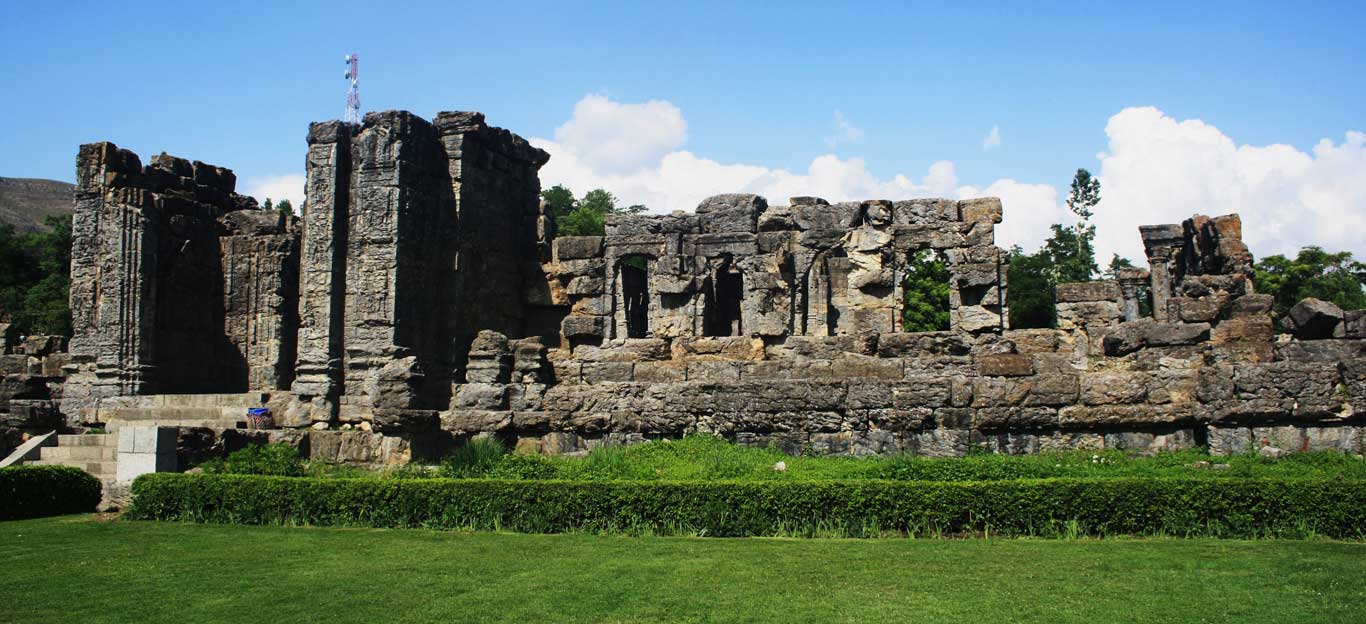
The great kings Ramdeva and Lalitaditya (A.D. 693-720) built temples in honour of this tirtha on the plateau. There is a canal from the Lidder to irrigate this plateau which yields thousands of maunds of paddy.

Achhabal Garden

Returning from Pahalgam one can visit Achhabal garden. Here is a fountain of water gushing out of a mountain side. It is believed to come out of the Brangi which disappears at Dewalgam. The water of Achhabal Nag flows out at three different places from under a densely covered mountain with deodar trees. The water is highly digestive and refreshing. According to Pt. Anand Kaul the old name of Achhabal was Akshavala, founded by King Aksha who reigned over Kashmir from 486-326 B.C. It has been remodelled by the Moghul rulers and a garden laid out in A.D. 1640 by Shah-i-Jahan's daughter.

There are ruins of an old Hamam on the western side of the garden from which warm water used to flow. There was no outward sign which would give people an idea of the mechanism of warm bath. Some investigators opened the Hamam and found inside a candle burning under a big iron pan-so people say which warmed water. What kind of oil was used and what kind of wick, no one knew. The candle got extinguished and it was found impossible to light it again. It had been burning for several centuries. Today we see only walls and building of the Hamam but no warm water.

The water of the spring is turned into three canals which flow over three terraces. The main canal has several fountains. The greater number of fountains is in the main tank. There are three cascades over which water flows. It is lovely to see fountains playing when the rays of the sun fall on them.

The garden is shaded by graceful chinar trees. There are three pavilions on the upper terrace, where visitors sit to have their meals. A pair of plumbeous-redstart may be seen skimming along the water, or a hoopoe working hard on the lawn with its beak, also a turtledove peacefully cooing on chiars, might be heard.

The well-decorated lawn and garden flower beds, the cool shade of chinars, the breeze blowing from the wao-mall resting on the Banahal ridge, sieved through the pine leaves; the natural beauty of the place, produce their effect to the full, on the beholder who, forgeting his physical aspect, enters into the mental plane of All Consciousness. Will he evermore abide in this Realm of Bliss. Shri Utpal Dev Achariya has said:

Bavat dveshatan pashyn
Bavam bavam bavan mayem
Vetsieeyam nera Kankhya
Preharsha paripurita.
Possessed by Thee, I see Thee pervade through everything in the Universe, May I rove about desireless, filled with ecstasy.

The Government has improved and extended the garden a great deal. There is also a post office, a hospital and regular bazar. Buses run daily from Srinagar to Pahalgam. A bus from here goes to Kokernag a collection of delicious water. Here is a restaurant also. There is a trout hatchery attached to the garden. Brown and Rainbow trouts are reared.

When water flows out of the garden it turns into a river, just outside the garden the banks are covered with watercress and willow groves. It irrigates a large tract of land which yields thousands of maunds of paddy.

There is an annual fair held in the month of Ashad (Sept.-Oct.) which lasts for a week. People come from all villages round, to make merry. Dances ta place, singing parties recite songs. It may be called a kind of May-day.

Kothair Nag

Kothair Nag is about 6 miles from Achhabal garden. The road is partly metalled and partly kacha. Past Naga Dandi Ashram, it passes through a dense pine-forest along the southern boundary of the Khundroo Military area. It then goes over the Karewa (udar) and enters into the Kothair village. The spring lies on a raised spot of the village above the habitation. It was through the courtesy of one of my relatives that I visited the spring on the 3rd day of August I955 with my daughter and grandson.

When we sat on the edge of the spring my thoughts ran in imagination to the tenth century A.D. The whole valley was then densely covered with elm and Pine trees with thick undergrowth of hazel. The circular (kond) spring was then glittering with blue water from the reflection of the surrounding coniferous trees, just as we see today Nila Nag of Ver district (Shahbad).

The village must have been lower down. The medicinal quality of the water of the spring must have attracted the people from the various parts of the country just as today people go to bathe in the hot spring of Meru Wardwon. At the annual fair people brought diseased persons to be cleansed. Hence the name of the spring is Papashudan Nag (Sin cleansing spring). The whole area was called Kothair Wan (forest).

The Kothair Nag is a circular spring. Its radius is about 5 yards. It is covered with pond weeds. We saw a clear blue line from one side to another and were told by the villagers that those who know swimming, swim in it. It appears fairly deep. The edge of the kond (spring) is walled with stones. It seems that there are steps of stones round it. The water of the spring flows from the north. There is a small place for bathing, from where the water flows down, just on the edge of this side, there is a baderapeth without any lingam. Close to the baderapeth (pedestal) is an image of a bull (Nandikishwar) in a sitting posture. The head of this image is damaged. There are some stones rubbed with Sindhur (red lead). There are 3 old elm trees.

The spring is enclosed by a wall. The plinth of the wall and its northern side is partly intact. On the same side there are the remains of five temples. One temple has a staircase of 5 steps, the other has a mono-stone ceiling in the centre of which is a beautifully carved lotus. There are ruins of the other temples in the north eastern corner. The middle temple which is also in ruins, rests on the wall and on its left and right are nine niches of man's height where one can easily sit or stand. It would be interesting to excavate the whole place for the sake of historical research.

There are no pine trees in the village which is now near the spring. People depend for water on the spring. The pine trees densely cover the mountain slopes. The whole valley is dotted with walnut trees. There are maize fields on the submontone side, while the area which is drained by the spring water, yields rice (Shali). Ashad, Shuklapak, thritisi (Sept.-Oct.) is said to be the annual fair.

On enquiry from a peasant about the tradition of the place, he said 'You people know well' and recited:

Mokan Rajas monshi hend kan
Yudvai gatsihe Kothair wan
Tati tas tsalahan monshi hend kan

Mokan Raja has the ears of a buffalo.
Would that he would go to Kothair forest,
There he would become free from buffalo's ears.

It is said that one Raja Matsakund of the Deccan had the ears of a buffalo. No one knew it, except the royal barber. When the barber died, his son entered the palace to shave the hair of the Raja, who admonished the new barber not to expose the ears of the Raja to the public. He restrained it for some time. When he no longer could suppress his thoughts, he went to a forest and shouted at the top of his voice, the above couplet and ran away. The Raja searched for Kothair wan and he got rid of buffalo's ears by bathing in the spring. According to Pt. Anand Koul, the enclosure round the spring was erected by King Bhoja of Malva during King Anant's time (A.D. 1028-63). This tank of the spring was constructed by a Raja of the Deccan named Matsakund.

Nila Nag

Nila Nig is erroneously called Ver Nag. Ver is the name of the district, as the Nag (Spring) happened to be in this district, hence this mistake. It lies at the foot of a mountain densely covered with blue-pines. According to the Puranic story, after Kashyap Reshi reclaimed the valley of Kashmir, he made his son Nilal Nag, the king of Kashmir Nags. This is one of the largest springs not only in Kashmir but in India too. It is said that the Nilamat Purana came out of the spring. It mentions the rites and ceremonies which were performed by the people of Kashmir, and which enabled them to live in the valley.

The original shape of this spring must have been circular (kund). When Kashmir became part of the Mughal Empire, Jahangir in 1620 A.D. changed the shape of the spring into an octagonal basin. Its circumference is about 240 ft. It is surrounded by a brick-wall with a number of vaults. Just near the entrance there are some murties inside a vault where a Brahman performs puja. The water of the spring is clear as crystal. The reflection of green pines in the lake and the serenity of the surroundings presents a calm and peaceful scene to look at. The flow of water through the channel is rapid. One finds it difficult to stand erect in the shoulder deep cool water. It abounds in fish. Just outside the enclosure there is a temple which is dedicated to Shiva whose satellite is Nila Nag. People come here to bathe on the New Year's Day according to the Lunar calendar. Near the eastern wall there is another spring the water of which bubbles up like an artesian well. There are flower beds of Zinnias, Marigold etc., hoopoes, redstarts, bulbuls and thrushes may be seen on the lawn.

About one mile and a half from this spring is Vethavuthur the original source of the Vetasta (Jhelum). There are a number of springs close by called Sapta Reshi (Great Bear). These run dry from October to March as these are probably intermittent springs. The waters of springs mingle at Sangam people bathe on sacred days. There is a (confluence) where fair held on Bahadron thriyudeshi of the bright fortnight (about September) which probably must be the birth day of the Vetasta.

Kashmiri Overseas Association
Srinagar & its Environs